
In today’s competitive tendering environment, innovation in M&E bids is an imperative factor in winning bids. With an increase of green initiatives and eco funding, contracting authorities across public and private sectors are under more and more pressure to deliver energy efficiency, carbon reduction, operational resilience and value for money. As a result, bidders that can clearly demonstrate how their mechanical and electrical solutions go beyond compliance are far more likely to stand out.
Many otherwise strong M&E submissions fall short because innovation is poorly articulated – they might list technologies without explaining outcomes, or reference sustainability buzzwords without showing real impact. Clearly demonstrating what and how your innovation is and how it’s making a difference will set you apart from the crowd.
In this blog, we explore how to showcase innovation effectively in M&E bids – from renewable energy solutions like solar PV to intelligent building systems such as smart HVAC – and, crucially, how to align these innovations with tender evaluation criteria.
Why Innovation Matters in M&E Tenders
Most M&E tenders explicitly score innovation, continuous improvement or added value. Even where it isn’t a standalone criterion, innovation often determines marks for:
- Sustainability and net zero delivery
- Cost reduction
- Quality and performance
- Risk management and resilience
- Social value and futureproofing
The challenge for bidders is that innovation must be relevant. Assessors are not looking for experimental technology or unproven concepts, they want practical, deliverable innovation that reduces risk while improving outcomes.
Going Beyond Standard Compliance
A common mistake in M&E bid writing is presenting innovation as a shopping list of technologies:
For example, phrases like: “we will install high-efficiency boilers, LED lighting, and BMS controls” are technically sound, it tells the evaluator very little. Most competitors will be offering the same baseline solutions, with little measurable evidence to back it up.
Instead, innovation should be framed as:
- A problem identified
- A solution selected
- A measurable benefit delivered
Rather than stating that you install high-efficiency plant, explain why it was selected, how it integrates with other systems, and what it achieves for the client. This level of detail will help to set you apart from the competition and tells your evaluator that you have a concrete plan that supports the buyer’s objectives.
Renewable Energy Innovation: Solar PV and Beyond
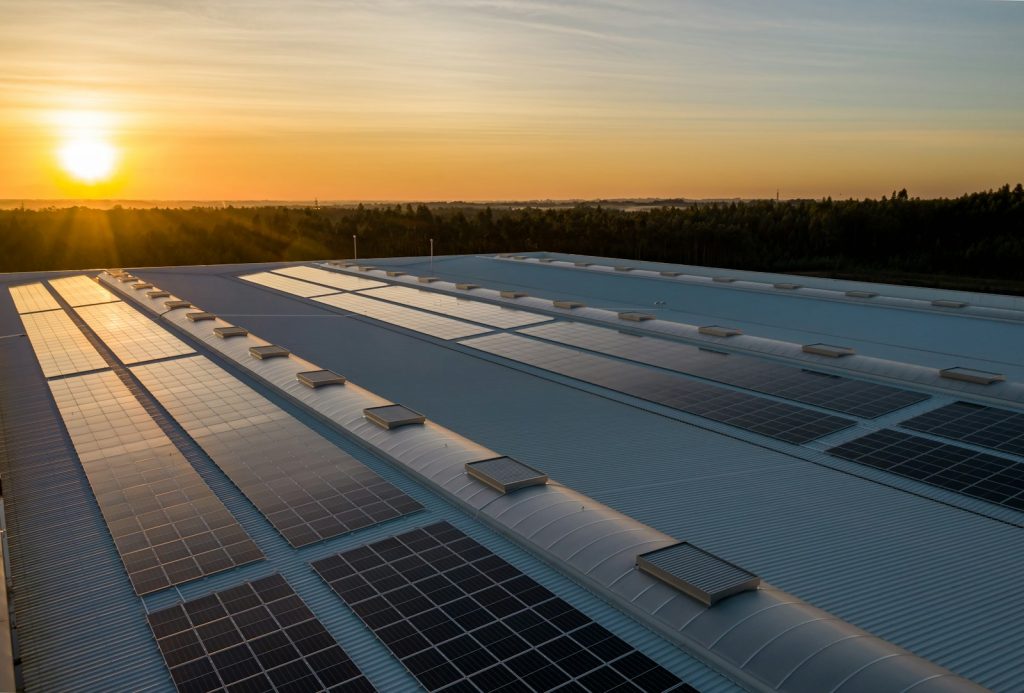
Solar PV remains one of the most recognisable innovations in M&E tenders but simply including it is rarely enough to score highly. Strong bids go further by demonstrating:
- Site-specific feasibility (roof loading, orientation, shading)
- Integration with electrical infrastructure
- Smart export limitation and grid optimisation
- Battery storage or EV charging
For example, innovation could be shown by designing a solar PV system that prioritises on-site consumption, integrates with battery storage and reduces peak demand charges, delivering both carbon and cost savings. This approach aligns renewable energy with commercial outcomes, which evaluators value highly.
Smart HVAC Systems: Intelligence Over Equipment
Smart HVAC is one of the most powerful areas for innovation in M&E bids, particularly in healthcare, education, commercial offices, and mixed-use developments.
What Makes HVAC “Smart”?
Innovation in HVAC is less about the plant itself and more about how it is controlled, monitored and optimised, including:
- Demand-controlled ventilation
- Occupancy and CO₂ sensors
- Predictive maintenance analytics
- Seasonal optimisation strategies
- Remote monitoring and fault diagnostics
A smart HVAC narrative should focus on performance over time, not just installation quality.
Integrating Building Management Systems (BMS)
One of the most underused opportunities in M&E tenders is the intelligent use of BMS to unify multiple innovations into a single and coherent solution. Rather than treating BMS as a standard deliverable, high-scoring bids present it as:
- A real-time performance management tool
- A mechanism for continuous improvement
- A platform for future innovation
For example, bidders can demonstrate how BMS data will be used to:
- Identify inefficiencies early
- Reduce reactive maintenance
- Support client energy reporting
- Improve occupant comfort
This positions innovation as ongoing value, not a one-off feature.
Cost and Innovation
One of the most persuasive ways to showcase innovation in M&E bids is through whole-life costing. Innovative solutions should be explicitly linked to:
- Reduced energy consumption
- Lower maintenance requirements
- Extended asset life
- Reduced downtime
For instance, smart HVAC controls may carry a slightly higher capital cost but deliver measurable operational savings over the contract term. When framed correctly, this demonstrates commercial awareness and supports higher quality scores.
Sustainability, and Net Zero Alignment
Most M&E tenders now reference sustainability strategies, carbon reduction plans, or alignment with frameworks such as BREEAM or local authority climate action plans. Innovation should therefore be positioned as an enabler of these objectives, not a separate concept.
As a result, strong bid responses will:
- Quantify carbon savings where possible
- Align innovations with net zero pathways
- Demonstrate adaptability to future legislation
- Reference performance monitoring and reporting
This reassures evaluators that innovation is controlled, compliant and measurable.

Communicating Innovation
You can have the most impressive range of innovative implementations out of all bidding contractors, but if this is not effectively communicated, you won’t get the job. It’s important to remember that the evaluators may not be engineers and there may be numerous evaluators marking different sections of the bid.
As a result, innovation should be drip fed into your responses throughout the bid and clearly explained for anyone to understand. Effective innovation sections use:
- Plain English explanations
- Simple diagrams or process descriptions
- Before-and-after comparisons
- Clear outcomes and benefits
Avoid excessive technical wording unless it is explicitly required or you are copying terminology used in the quality questions. Innovation should feel accessible, logical, and client-focused, not name-dropped to try and impress.
Common Mistakes to Avoid
When showcasing innovation in M&E bids, avoid:
- Over-claiming or exaggeration
- Generic statements with no evidence
- Copy-paste sustainability text
- Unproven or high-risk technologies
- Innovation that doesn’t link to the client’s brief
Common and easy slip-ups like these can cost you bids and contracted work. As a bid consultancy, we see these mistakes all the time and know what buyers do not want to see.
Final Thoughts
Winning M&E bids is not about presenting the most complex technology, it’s about demonstrating intelligent, practical innovation that delivers real outcomes. Your innovation should be in line with that of the buyer’s – this is essential and proves that your businesses are aligned.
From solar PV systems that actively reduce operating costs, to smart HVAC solutions that improve comfort while lowering emissions, the most successful bidders are those who can clearly explain why their approach is better and how it benefits the client over the life of the contract.
If you need help with an M&E bid or want further assistance on how to integrate innovation into bids, please reach out to michael.baron@bidwritingservice.com or fill out the form below!
Request a Callback
"*" indicates required fields